




THE EFFECTS OF HAZE ON HEALTH
&
HOW TO PROTECT YOURSELF FROM IT
The people living in Singapore aren’t at all unfamiliar with the annual haze. Returning once every year to Southeast Asian countries, without fail, is the health-threatening haze resulting from the burning of forests in some countries to quickly clear land. However, what makes haze harmful, and does the arrival of haze actually spell the end for all outdoor activities? Most importantly, how will the potentially dreaded haze return to Singapore during the dry season affect those recovering from the COVID-19 disease? Read on to find out.
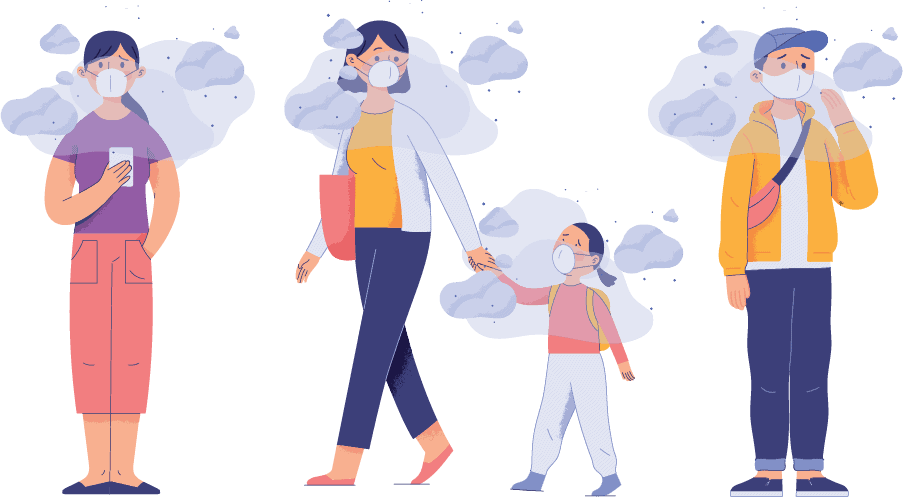
Haze is the aggregation of fine pollutants—such as smoke, dust,
and toxic gases— in the atmosphere. When a place is stricken by haze,
the air often appears opalescent and visibility is obscured.

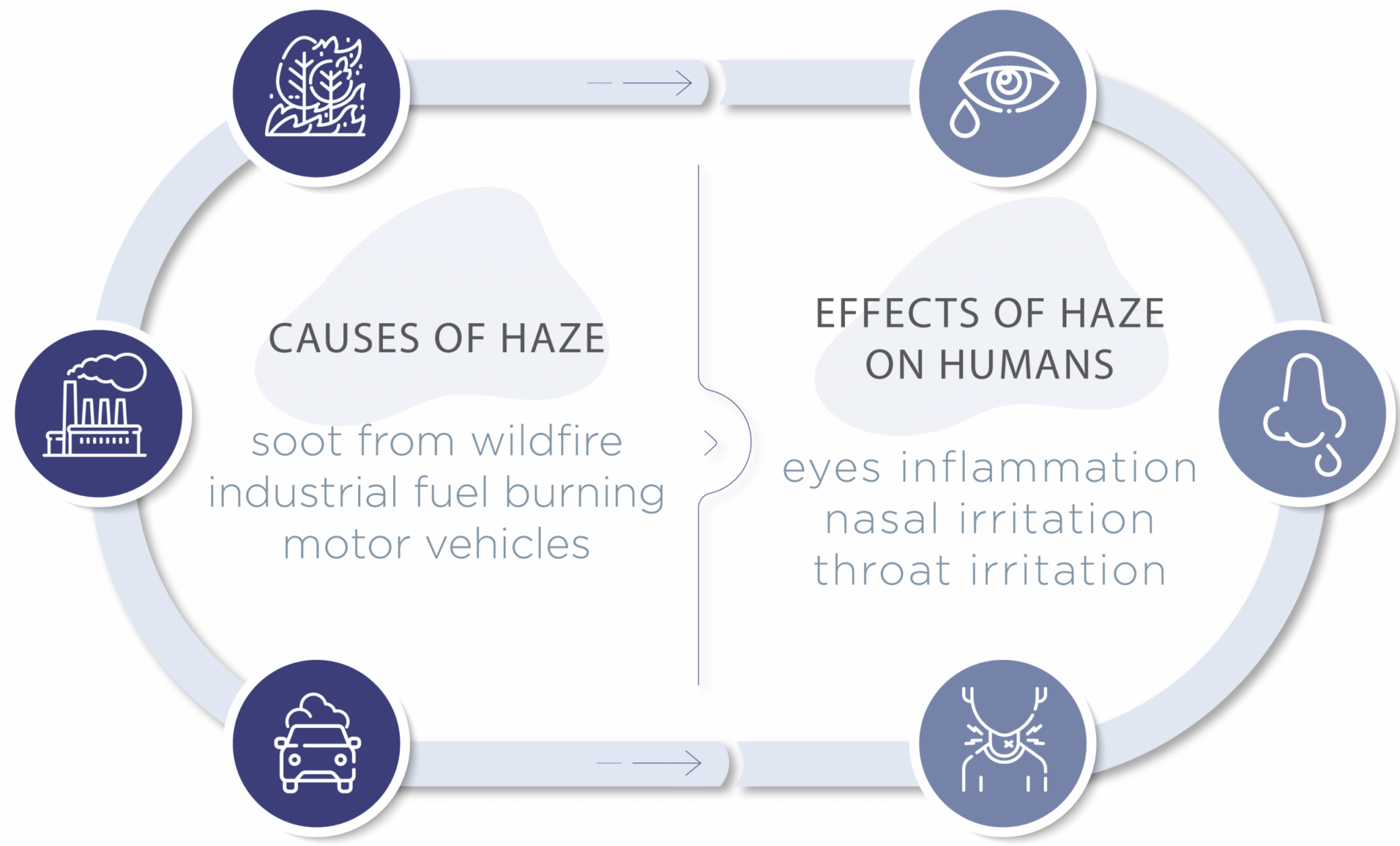
WHAT ARE THE CAUSES?
Traditionally, haze occurs when fine pollutants accumulate in the atmosphere, often in dry air. When these pollutants are unable to naturally disperse due to weather conditions, their concentration increases and will therefore turn into a vision-impairing, health-threatening haze.
In Southeast Asia or Singapore in particular, the annual haze is often the result of the slash-and-burn practice by the farmers in Sumatra, Indonesia. As they often do during the dry season every year, the Southwest Monsoon winds come into play, blowing the smoke from the fires in Singapore’s direction.